
Steel
Sheet, plate, sections and bar can form the basis of many construction and component enquiries. Specify the required grade, dimensions and any defined coating or finish. The profile alone does not establish suitability for the application.
Select materials by their role in the project. Appearance is one part of the decision; the application, environment and design specification give that decision its foundation.
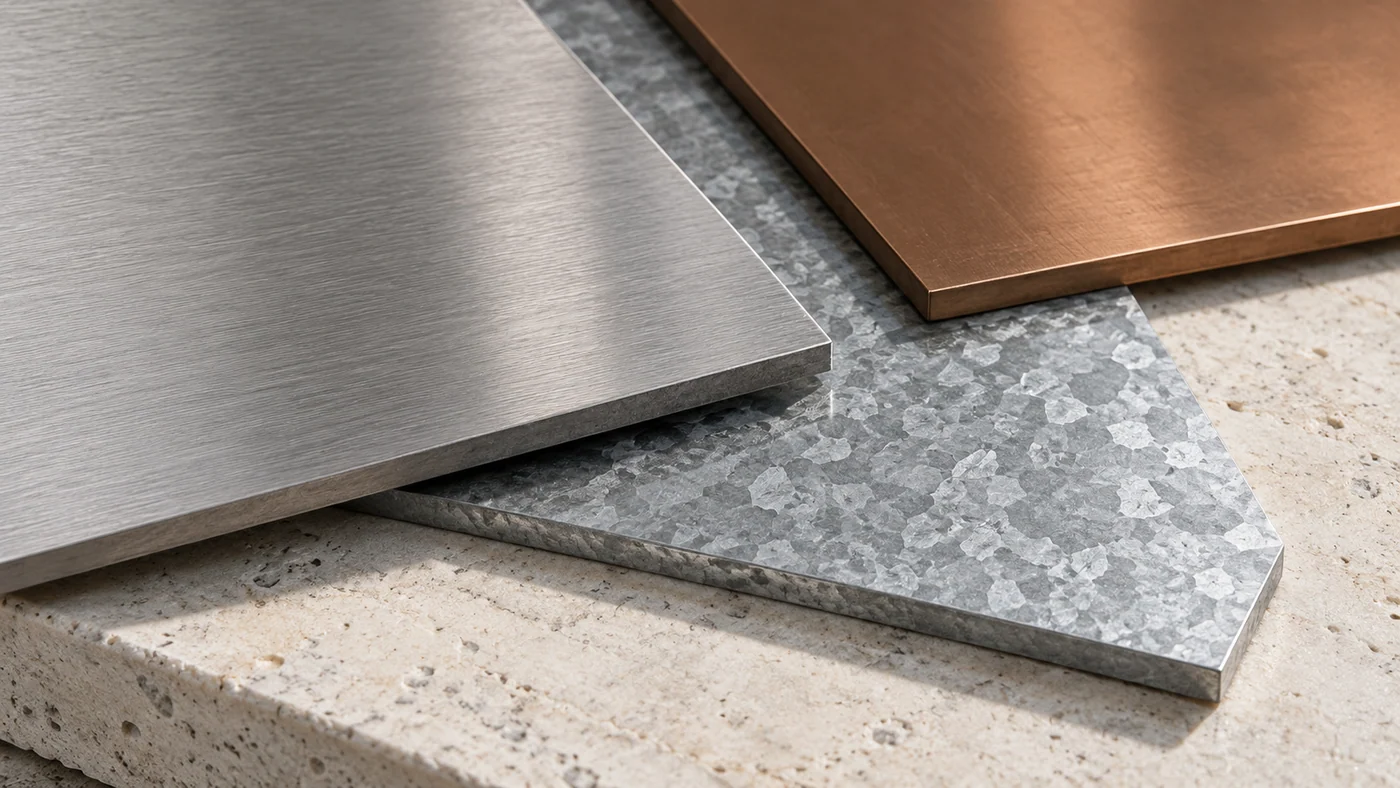
These are starting points for a material conversation. State the grade and finish required by the project specification wherever they have been defined.
Sheet, plate, sections and bar can form the basis of many construction and component enquiries. Specify the required grade, dimensions and any defined coating or finish. The profile alone does not establish suitability for the application.
Stainless steel brings a distinctive material and surface character. Grade and finish are separate parts of the specification: include both, together with the intended use, exposure conditions and any relevant appearance reference.
Aluminium can be considered in sheet, plate and profile-based requirements. State the alloy or grade and temper where specified, alongside thickness, dimensions and any defined surface treatment.
Copper-based metals can be part of visible architectural and decorative details. Clarify the material, intended appearance, finish reference and expectations around natural surface change, where these are relevant to the project.
A finish description is most useful when it is backed by a specification, colour reference or agreed sample.
Where a project requires a coating or surface treatment, share the relevant specification and identify which surfaces will be visible. Explain whether the finish has an appearance role, a protection role, or both.
Include any expectations around edge treatment, weld appearance, handling protection and the way the part will meet adjoining construction.
Discuss materials & finishes| Requirement | Information to provide | Why it helps |
|---|---|---|
| Material | Metal, grade or alloy, thickness and form | Defines the base material before the surface is discussed. |
| Surface appearance | Finish reference, texture, colour and visible faces | Makes the intended visual result clear. |
| Coating or treatment | The specified system or requirement | Connects the finish to the project specification. |
| Environment | Installation setting and relevant exposure information | Provides context for the designer’s material and finish selection. |
| Handling & installation | Protection, fixing and adjoining material details | Helps define how the finished component will be handled and installed. |
Share the material, the drawing and the requirements that matter. Start a practical conversation with Masonry Metals.